Orange the world: 'Violence against women is a major societal problem'
- News
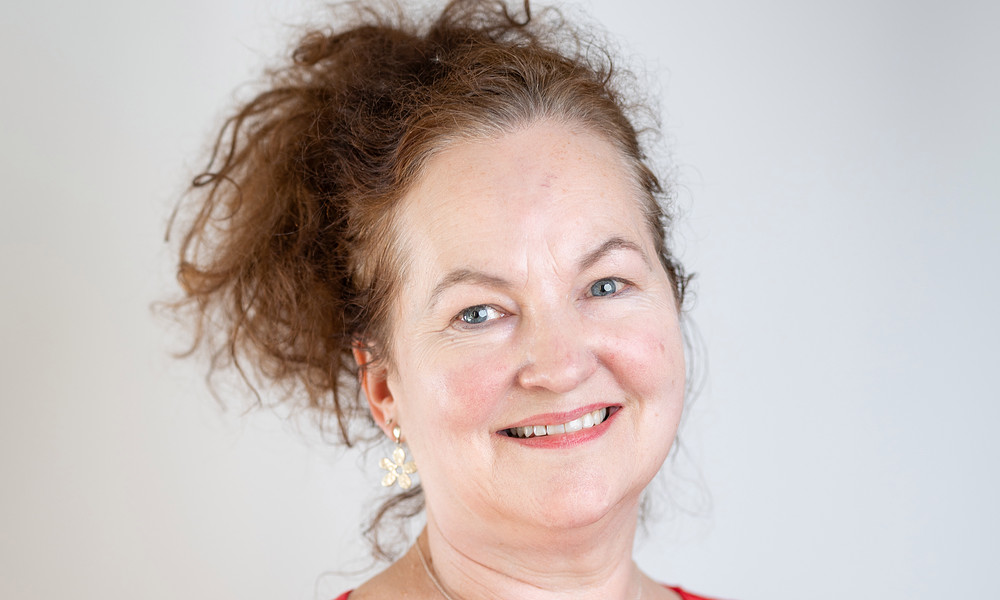
Between 25 November and 10 December, the Orange the World campaign will take place worldwide, drawing attention to violence against girls and women. Students and staff also have to deal with the subject at Hanze. It is therefore important to constantly raise awareness and provide good education.
Text: Bart Breman
"Violence against women is a major societal problem," says lecturer-researcher Winette in 't Veld, and the figures confirm this. For her work within the Welfare, Education & Sport cluster, she deals with so-called taboo topics, such as violence against women and child abuse.
Every day, 137 women die as a result of violence by a (former) partner or family member. In addition, 33 percent of all women worldwide have experienced physical or sexual violence. Almost a quarter of all Dutch women have experienced some form of sexual abuse or violence.
"Traditionally, there has been this idea that women are inferior or second-class and that men are therefore superior: stronger and more powerful." This idea created skewed relationships between men and women, which still affect our current society. "Women are still sometimes paid less than men for the same work." The skewed relationships can also cause undesirable behaviour to be perceived as normal. "A student once said that she had talked to her mother about transgressive behaviour while going out. ' Well', her mother told her, 'that's just how it is ...'"
In our current society, the media have a major role. "Social media has a lot of influence on what people think and believe." In 't Veld points to the fuss surrounding 'Lentekriebels', a series of teaching packages about friendship and falling in love. "There are many people who believed the fake news that was spread about it. Ultraconservative influencer Andrew Tate also has a lot of influence on young people with his ideas."
"Therefore, I think is is important is that we not only discuss suspicions of unsafe situations, but also have a conversation about what healthy sexuality actually is," explains In 't Veld. "Awareness of what happens when you treat someone in a certain way is very important." The conversation about this must be conducted together: "With both boys as well as with men. Otherwise it is us against them and it is a problem for all of us."
The government should also play a greater role in combating violence against women. According to a report by the Council of Europe, the Netherlands is structurally doing too little to combat this. "Despite the work of Government Commissioner for Sexually Transgressive Behaviour and Sexual Violence, Mariette Hamer, more control must be taken and different agencies will have to work together much more and much better."
Violence, against women and in the domestic sphere, occurs everywhere in and in every layer of the population, emphasises In 't Veld. People also experience it at Hanze. Therefore, it is important to continuously raise awareness and provide good education. "During Orange the World, we pay a lot of attention to the subject. For example, there are lectures, debates and performances."
But just creating good education and awareness is not enough. Approachable points of contact and accessible care are essential. "We have had a Social Safety project leader for a few years now and there are various staff members and confidential counsellors active at Hanze. There is a point of contact for students and staff at each programme. Not only to report to, these people are also there to answer your questions and discuss things.
The attention that Hanze pays to the theme is therefore good, but it could be a little more prominent, says In 't Veld. "The stories of experts by experience, for example, carry a lot of impact. They are so incredibly valuable and create a lot of awareness. That is why I strongly advocate the structural use of experiential experts, also within education."