Urban Regeneration
- Minor
Urban Regeneration
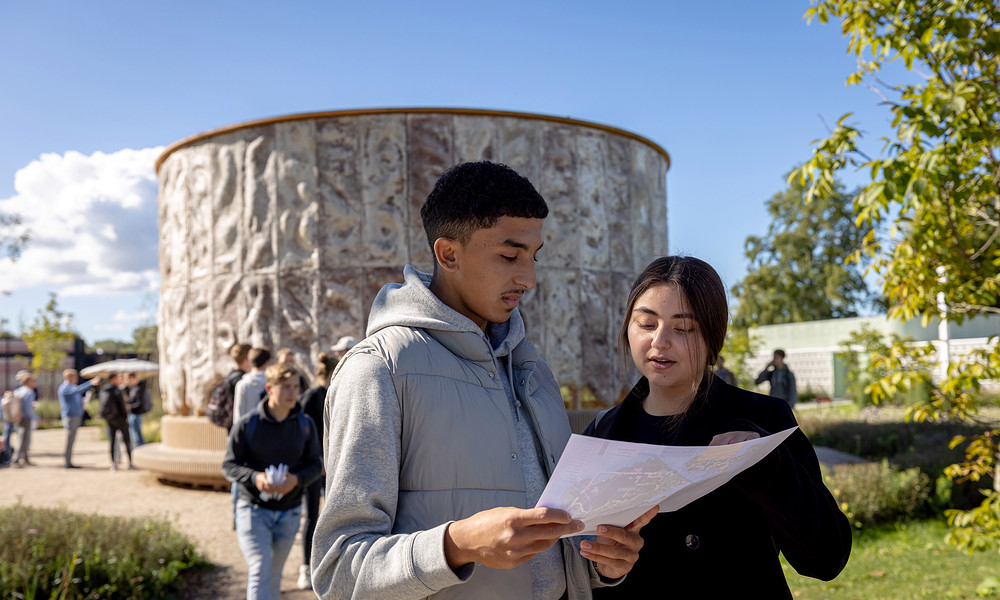
Urban Regeneration is about renewing and improving existing urban areas, with the aim of strengthening livability, the local economy, and spatial quality. During this minor, you will work on a specific area facing challenges related to livability, future resilience, and the needs of its users. Your goal is to give this area a new impulse and make it more resilient to future developments.
You will start by observing and analysing the area. In addition, you will engage with residents and other users to clearly identify the real underlying issue. Next, you will explore relevant trends and developments and, together with your group, translate these into a future-oriented vision. Based on this vision, you will design an intervention for part of the area. You present this design to the users to gather feedback and further refine your plan.
The final result is a design that aligns with user needs, contributes to a resilient and future-proof living environment, and reflects your own ideas and insights.
In this minor, you will develop practical and design-oriented skills to address urban challenges, both for and together with the people who use this area.
After a short introduction period, during which you get to know your fellow students and complete a first urban regeneration exercise, you will start working on the central question:
How do we design and organise a future-proof built environment that meets the needs of its users?
By the end of this minor, you will be able to answer this question independently. You will learn how to analyse an area, how to engage with residents and users, and how to clearly define the underlying issue. By working with designs, concepts, and visualisations, you will learn to systematically analyse and evaluate challenges and to justify your choices.
When improving or renewing an area, you always take future developments into account. To incorporate uncertainty and ongoing developments into your plans, you will work with scenarios. These help you develop a strong and future-proof vision. Based on this vision, you will create a design for part of the case study area, which you will test with users to ensure it truly meets their needs.
This minor is open to students from all fields of study. No prior knowledge of spatial or social issues is required, and you do not need a design background. In fact, the diversity of knowledge, experience, and perspectives enriches collaboration and strengthens the quality of the solutions.
In addition to working on a relevant and real-world topic, you will develop skills such as creative and innovative thinking, collaborating with students from different backgrounds, and understanding the interaction between people and their living environment. In this way, you learn how to co-design a future-proof living environment.
In this minor, you will work together with your group on a concrete challenge within a case study area. You will be supported by a mix of lectures, tutorials, guest lectures, design sessions, fieldwork, and excursions.
What makes this minor particularly valuable is the active contribution of students. You will not only learn from lecturers, but also from each other. By collaborating and combining different perspectives, you will develop stronger and more creative solutions.


How satisfied are you with the information on this page?
