“It should be about collaborating as equals”
- Research stories

What makes family businesses in the Northern Netherlands so innovative? Mira Bloemen-Bekx, Professor of Regional Innovative Capacity, studied the innovation capacity of these often modest entrepreneurs. What stood out to her: true innovation is not just about coming up with something new, but precisely about continuing to build on what is already strong, and surrounding yourself with the right people. Together, for the region.
In a world that is changing ever faster, where technological developments follow one another at high speed and “disruption” seems to be the buzzword, it is easy to forget that renewal can also mean something else. Not always big, not always loud. Sometimes it is steady, thoughtful, and rooted. That is exactly what professor Mira Bloemen-Bekx discovered when she spoke with dozens of family businesses in the Northern Netherlands.
“What struck me,” she says, “is how good these companies are at combining continuity and renewal. They have the ability to innovate without losing their identity. That is sometimes taken for granted, but it really isn’t. We should value that more.”

When Bloemen-Bekx started her role as professor two years ago, she was given a clear assignment: strengthening the innovation capacity of Small and Medium-sized Enterprises (SMEs) and the region. But soon a fundamental question arose: what is innovation capacity?
“You can only strengthen something if you know what it is,” she explains. “The literature offers limited guidance. Much research has been conducted in large companies, and those results cannot simply be translated to medium-sized and smaller businesses. I needed more than definitions. I had very little that truly helped me understand what innovation capacity looks like in practice. So I thought: I’ll just ask the people who deal with it every day.”
To make her search more concrete, Bloemen-Bekx decided to focus on family businesses. “If a company has existed for thirty, forty, or even a hundred years, something special must be going on,” she explains. “There must be a capacity within that company to reinvent itself time and again. I wanted to understand that.”
She spoke with owners of thirty large and medium-sized family businesses in the Northern Netherlands. “Every company is different, and that’s exactly what makes it so interesting,” she says. “There is no standard recipe for innovation capacity. Every entrepreneur has to figure out, together with their team, what works for their company. But you can learn from others, if you are open to it. The entrepreneur does not determine everything, but does play a crucial role in the company’s direction. And one thing is key: surround yourself with the right people.”
From these conversations emerged what Bloemen-Bekx calls a “Theory from Practice”: a model that describes innovation capacity through six dimensions: leadership, organization, people, finance, collaboration, and innovation.
“These are the levers companies can pull,” she explains. “A company that wants to strengthen its innovation capacity can, for example, look at its leadership: is the strategy clear and supported? And at the organization: do we have room, alongside daily operations, to also work on the future? That balance between the here-and-now and the long term is crucial.”
In academia, this is called organisational ambidexterity: the ability of a company to be both efficient and innovative at the same time.
“It sounds very logical,” Bloemen-Bekx smiles, “but in practice it is incredibly difficult. Especially for SMEs, where daily operations demand constant attention.”
A striking outcome of the research is that successful family businesses are not only good at innovation, but also at leveraging their existing knowledge.
“We are often fascinated by new knowledge,” Bloemen-Bekx says. “New technology, new markets, new products. But what I saw in family businesses is that they excel in further developing existing knowledge. They build on what they already know, combine it with new insights, and remain relevant. That is their strength.”
This ability to learn from the past is closely linked to continuity. Employees often stay for a long time, knowledge is passed on and safeguarded.
“It creates a stable foundation,” she says. “But it is not automatic. There are also family businesses that become stuck in the past. The difference lies in the entrepreneur’s openness: keep learning, keep asking questions.”
Bloemen-Bekx also uses these insights in her podcast series ‘De bescheidenheid voorbij’ ( Beyond Modesty), in which she interviews entrepreneurs about their success, vision, and connection to the region.
“In those conversations, you hear such powerful stories,” she says. “About pride, about the choice to continue doing business here. These stories show that innovation is not only about technology or growth, but also about identity and values. That may be less visible, but it creates sustainable competitive advantage and contributes to continuity.”

What is very characteristic of the Northern Netherlands is the work ethic and the sense of doing things together.
According to Bloemen-Bekx, regional culture plays an important role.
“The mindset and culture here in the North are very distinctive,” she says. “There is a strong work ethic, and people remain loyal to one another. There is trust and mutual respect. Family businesses in this region truly build something together. Employees don’t immediately leave for another company at the first opportunity. That loyalty provides stability and continuity.”
This down-to-earth and reliable attitude is also valued outside the region.
“Entrepreneurs from the North are often asked to work on projects in the western Netherlands precisely because they do what they promise. A deal is a deal. That is a valuable reputation.”
The insights from the interviews with entrepreneurs formed the basis for a new initiative: the SME Development Programme, in which entrepreneurs work together in groups to strengthen their innovation capacity.
“Many entrepreneurs know they need to innovate, but not exactly how,” Bloemen-Bekx explains. “They need a helping hand, someone who helps make it concrete. In the programme, we use the Theory from Practice model to assess together: where are you as a company, and which levers can you pull to become stronger?”
“In the first pilot, three groups of at least six companies will start,” she says enthusiastically. “They will work together for two years in learning groups, applying insights within their own companies while regularly meeting with other entrepreneurs to reflect, exchange perspectives, and learn together. Entrepreneurs don’t learn formally, from a book, but informally, by talking and doing.”
During her conversations, Bloemen-Bekx also asked entrepreneurs what innovation requires from them personally.
“They mentioned four things,” she says. “Taking time to reflect, to think, to mirror, and to move. Reflect on what went well and what could be improved. Think about the future: where do we want to go? Compare perspectives with others, so your own assumptions are challenged. And move, literally: go out, build new connections, acquire new knowledge, keep up with the times. Make conscious choices about which opportunities to seize.”
According to Bloemen-Bekx, that may be the biggest challenge: making time.
“I hope entrepreneurs occasionally take real time and space to think about the long term, to reflect, to be inspired, and to accept help from others. I sincerely wish that for them.”

There is a lot of discussion about broad prosperity, and family businesses play an important role in it.
The innovation capacity of family businesses is not only important for the companies themselves, Bloemen-Bekx emphasizes. It also contributes to the economic and social strength of the region.
“Family businesses are stable employers,” she says. “Even during economic downturns, they retain their people. That means employment, income, and social cohesion. This contributes to broad prosperity: well-being, not just wealth.”
This is precisely why the professorship’s research aligns with the Regional Innovation Strategy (RIS3), the innovation agenda for the Northern Netherlands.
“We want a region where more companies innovate, but also companies that can keep up with innovation,” Bloemen-Bekx explains. “At Hanze, and within my professorship, we actively contribute to that.”
A key theme in Bloemen-Bekx’s work is collaboration, between companies, but also between companies and knowledge institutions.
“I would love for us to find each other more easily in the region,” she says. “SMEs are incredibly important to our economy. I have great admiration for what they do: they take risks, create jobs, and carry responsibility. Our ecosystem should really be designed in a way that allows them to thrive.”
In this, Hanze has a clear role, she believes.
“We bring knowledge, but the starting point should be: what do you need, and how can we help? It should be about collaborating as equals. If we do that well, we can truly make the region substantially stronger.”
Read more (in Dutch) about the research on innovation capacity in large and/or innovative family businesses in the Northern Netherlands.
The research by Professor Mira Bloemen-Bekx forms the basis for the SME Development Programme, in which entrepreneurs work together to strengthen their innovation capacity. In small learning groups, they work on themes such as leadership, collaboration, and innovation.
Would you like to learn more as an entrepreneur or are you interested in participating? Contact Mira Bloemen-Bekx.
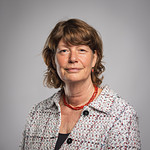
Professor Regional Innovative Capacity

Would you like to know more about the professorship Regional Innovative Capacity?
Regional Innovative Capacity'The on-campus resources for CMGT are such a perk'


'What I like is that the theory can be directly applied'
