
Students, researchers and business partners can come to the Hanze Sequencing Facility for genetic research based on DNA and RNA sequencing (the reading of DNA/RNA). The Hanze Sequencing Facility offers fully customised support from experimental design to data insights.
DNA can be seen as an instruction manual for the functioning of all living things, including humans, crops and microbes. Just as the words in a book are made up of letters from the alphabet, DNA consists of four chemical building blocks (bases). Reading the order of the bases in DNA or RNA is called sequencing. Collecting DNA and RNA sequence data is crucial for biomedical and biotechnological research.
Modern DNA and RNA sequencing techniques, or Next Generation Sequencing (NGS) techniques, allow researchers to read large quantities of DNA or RNA faster and more accurately. This provides insight into the genetic mechanism, how the biological process works, what the potential abnormalities are, and how they can be corrected.
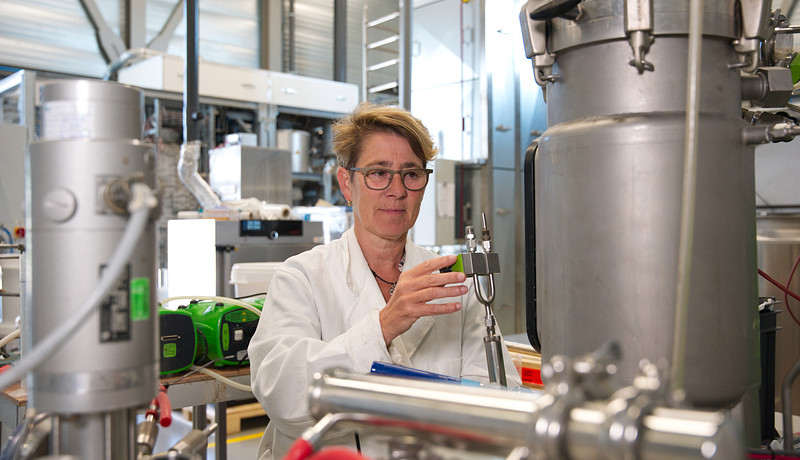
To conduct research, the Hanze Sequencing Facility is equipped with both Illumina (short reads) and Oxford Nanopore (long reads) platforms. Our specialists offer expert advice on various sequencing methods and the generation of meaningful data. In addition, there is close collaboration between the Hanze Sequencing Facility and the Hanze DataLab, where advanced analysis, interpretation, management and application of data and artificial intelligence (AI) take place.
Sectors
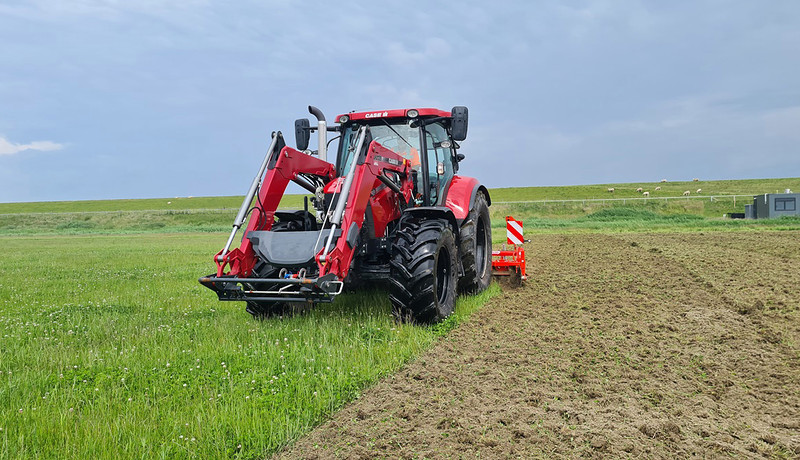
The Hanze Sequencing Facility is active in multiple sectors such as healthcare, food, agriculture, biotechnology and the green economy. By using our expertise and equipment, we contribute to cancer research, the development of regenerative agriculture, and novel food safety and nutrition solutions.
Origin
Founded in 2016 through the Hanze Research Centre Biobased Economy, the facility is affiliated with the research groups Data Science for Life Sciences & Health and Biomolecules & Health. To date, over 100 bioinformatics students have been trained and 30 research projects have been completed, generating a total of 320.000.000 bases of sequencing data, which is the equivalent of 100 human genomes.
(... ) a knowledge of sequences could contribute much to our understanding of living matter.
Frederick Sanger, inventor of the Sanger method, 1980
-

Sequencing services
Learn moreNeed support? Find out how we can help you with your research question.
-


-

-

Education
Learn moreNot only do we gather knowledge about the latest technologies, we also ensure that we pass it on.


Our people
Sla over
-
Biwen Wang
Senior researcher

-
Dr. Wynand Alkema
Professor Data Science for Life Sciences & Health
-
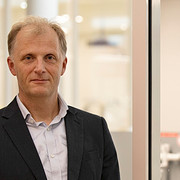
Dr. ir. Fin Milder
Professor Biomolecules & Health

-
Martijn Herber
Lecturer-researcher
.jpg?_jwt=eyJhbGciOiJIUzUxMiIsInR5cCI6IkpXVCJ9.eyJ1cmwiOiJodHRwczovL3d3dy5oYW56ZS5ubC9iaW5hcmllcy9jb250ZW50L2dhbGxlcnkvaGFuemUvb3BsZWlkaW5nZW4vc2lscy9tZWRld2Vya2Vycy9tYXJ0aWpuLWhlcmJlci1oZW1pLmpwZz90cz0xNzAxNDI4NDQ1NDMwIiwid2lkdGgiOjE4MCwiaGVpZ2h0IjoxODAsImZvY3VzUG9pbnRYIjowLjAsImZvY3VzUG9pbnRZIjowLjAsImlzcyI6ImYyMWVjZjc4Yzg0MzRkNWRiNDFmNWQ4YTNhZDBmNmRhIiwiYWN0aW9uIjoidHJhbnNmb3JtIn0._VjUyFFPqnVv-fBqXfkoomCQbfhAzl-qHUqZ0okAcGZ6xYkkKejG-ZbWk1CJZ0Jw7YntIcx4DlmWCn_R6R8QKg)
-
Jennefer Beenen
Researcher

-
Margot de Looff
Senior researcher


Contact
-

Biwen Wang
Senior researcher
- +31505956165
- [email protected]
- LinkedIn profile
-
Zernikeplein 11, 9747 AS Groningen